Fall 2026: at ESSEC, learning to take initiative in a changing world

1.9.2026

Founded in 1907, ESSEC Business School is a leading academic institution with a strong humanistic tradition. At ESSEC, the start of the 2026 academic year is more than the beginning of a new academic year. It is a time for learning, experimentation, and engagement in service of society. In a world where artificial intelligence is accelerating change and uncertainty is becoming the norm, ESSEC encourages students to reject passivity, develop their agility, and embrace action. It is a demanding way to relearn how to take initiative.


ESSEC-Cergy-juin-2026-by-Nicolas-Launay (86)

Since late August, new ESSEC students have been stepping through the school’s doors for the first time, both at the renovated Cergy campus and at the international campuses in Rabat and Singapore. Beyond discovering their programs, the School’s services, its global network of nearly 80,000 alumni, and its student association community, they are beginning a truly intellectual and human experience. From the opening lecture by Laurent Bibard, Professor in the Management Department, to sessions on social engagement and artificial intelligence, orientation week sets a clear direction. Learning is no longer about passively accumulating knowledge. It is about developing the ability to understand the complexity of the world and act with impact.

When welcoming students, Vincenzo Vinzi, Dean and President of the ESSEC Group, placed one skill at the heart of their experience: “learning to learn.”

At a time when artificial intelligence makes access to information more immediate than ever, the value of education is no longer limited to what we know. It also lies in our ability to question ourselves, make progress, rethink our assumptions, and learn from new situations.

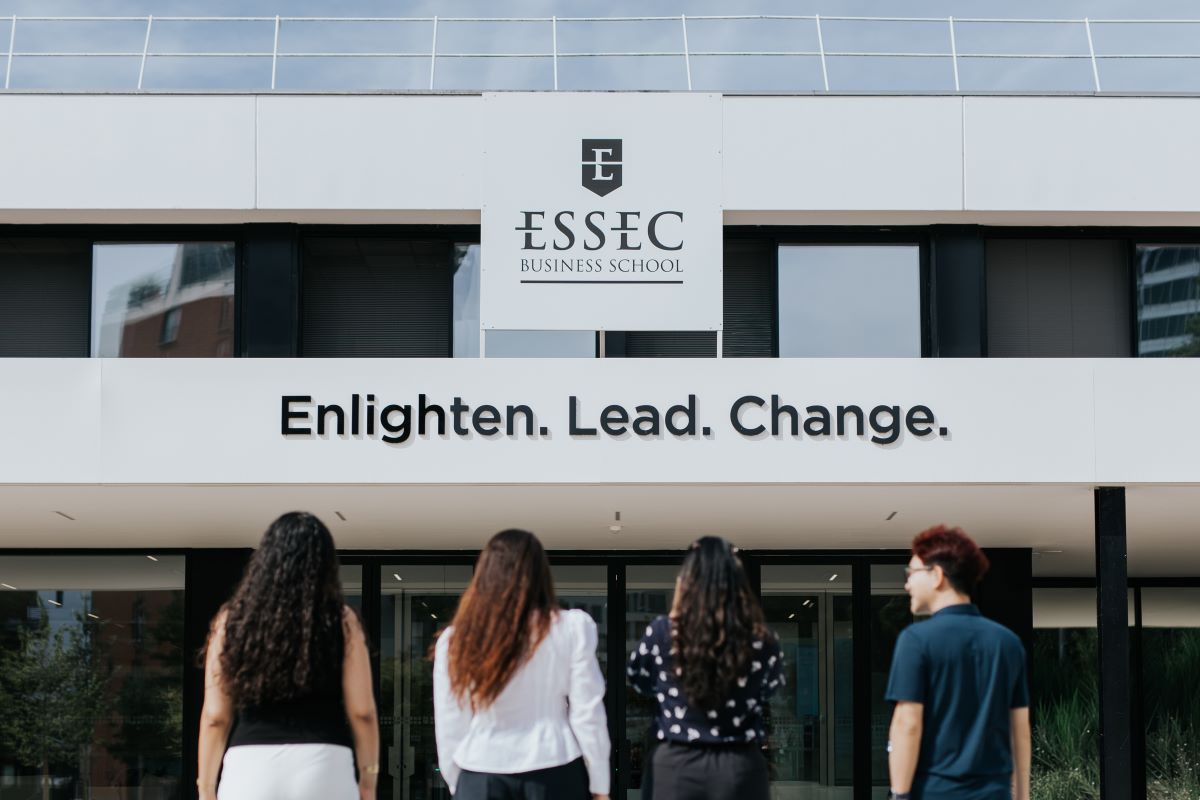
This ability means refusing to remain a spectator. For Vincenzo Vinzi, becoming a leader means knowing how to face complexity with the right mindset: being innovative, open, and responsible. At ESSEC, students are therefore encouraged to become agents of progress. They are expected to create lasting value and bring the School’s signature to life: Enlighten. Lead. Change.

This ambition goes beyond the classroom. From the first weeks, students combine courses, workshops, conferences, group experiences, and interactions with the professional world. The Organizational Experience Program, field experience opportunities, the Consulting and Entrepreneurship tracks, career workshops, and orientation seminars quickly place students in situations where they need to understand, decide, collaborate, and act.


ESSEC-Cergy-juin-2026-by-Nicolas-Launay (63)


The start of the 2026 academic year also invites us to look differently at a skill often associated with entrepreneurship: the ability to improvise.

During her address to students in the Pre Experience Programs, Aarti Ramaswami, Deputy Dean in charge of Pre Experience Programs, shared a personal metaphor: the blank canvas. When she paints, she does not necessarily know what the final result will look like before making the first brushstroke. The meaning of the work takes shape through the process of creation.

She encourages students to adopt the same mindset at ESSEC: to experiment, take initiative, learn, and accept that they will not know everything in advance. In this regard, she echoed the words of Laurent Bibard: “It is about reacquiring a capacity for adaptation that humanity has always possessed and cultivated, and that we are, in many circumstances, in the process of losing.”

Learning to take initiative may begin with this: accepting that you can start without having all the answers. Testing an idea. Making mistakes. Listening. Starting again. Adapting. And understanding that action is not the opposite of reflection, but one of its conditions.

This ability to adapt also takes on particular meaning at a school with a presence across several continents. At ESSEC APAC in Singapore, Professor Ping Sheng Koh, Associate Dean of Faculty, emphasized the importance of learning by doing and encouraged students to explore different cultures, organizations, and companies.

In the face of the changes brought about by artificial intelligence, he also encouraged students to develop critical thinking and independence, while remaining curious and attentive to what they can learn from their classmates, professors, mentors, and alumni. It is an invitation to see the student experience as a collective journey, shaped by encounters and diverse perspectives.

From Cergy to Singapore, via Rabat, this international outlook is an integral part of the ESSEC experience. It exposes students to different environments, cultures, and ways of thinking. It also encourages them to step outside their usual frame of reference and develop their ability to adapt.
 

ESSEC-Cergy-juin-2026-by-Nicolas-Launay (87)


At ESSEC, learning to take initiative does not simply mean starting a business. It means developing a mindset focused on action. It means taking initiative, dealing with uncertainty, working with people from different backgrounds, connecting disciplines, and turning knowledge into decisions.

Founded in 1907, ESSEC has more than a century of experience in educating leaders who can respond to the transformations of their time. With a global community of nearly 80,000 alumni, an international presence, and an educational approach that combines academic excellence with experiential learning, the School prepares students for a world that can no longer be seen as stable.

The start of the 2026 academic year therefore raises a simple but demanding question: What will we choose to do in the face of change?

ESSEC’s answer is an invitation. Do not remain passive. Learn to learn. Relearn how to improvise. And above all, rediscover the ability to shape the world rather than simply observe it.

Enlighten. Lead. Change.
Loading...